
American Black Cherry
Custom cherry countertops, islands, tables, desktops, and architectural surfaces built from solid hardwood selected for warmth, grain quality, and long-term performance.
Valued for its rich aging characteristics, fine texture, and natural luster, American Black Cherry is particularly well suited for warm contemporary interiors, transitional kitchens, hospitality spaces, and earth-toned material palettes.
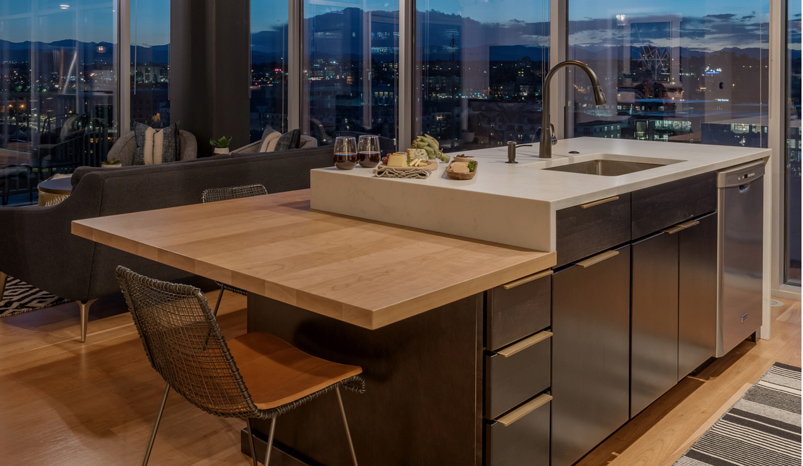
American Black Cherry is valued for its warmth, fine grain structure, and distinctive natural aging process. Freshly milled cherry begins as a light pinkish-brown and gradually deepens with time and exposure to light, developing the richer amber and reddish-brown tones traditionally associated with the species.
Its smooth texture and subtle grain movement create a softer and more refined appearance than many domestic hardwoods while maintaining the warmth, repairability, and tactile character of real wood surfaces.
Cherry pairs naturally with earth-toned palettes, plaster finishes, muted neutrals, darker paints, aged brass, and traditional architectural materials. Its warmth also provides a natural counterbalance within contemporary interiors dominated by stone, white surfaces, and cooler gray tones.
American Black Cherry commonly displays natural pitch pockets, subtle mineral variation, and occasional curly figure, all of which contribute to the individuality and organic character of the finished surface.
Armani Fine Woodworking builds custom cherry countertops, islands, tables, shelving, desktops, and interior surfaces from solid hardwood selected for color consistency, grain quality, and long-term performance.
Because cherry is a living material, variation in tone, grain, texture, and aging should be expected and contributes to the depth and character of each finished surface.
Why Designers Choose Cherry
American Black Cherry's character comes from:
American Black Cherry is frequently specified for:
Cherry pairs particularly well with:
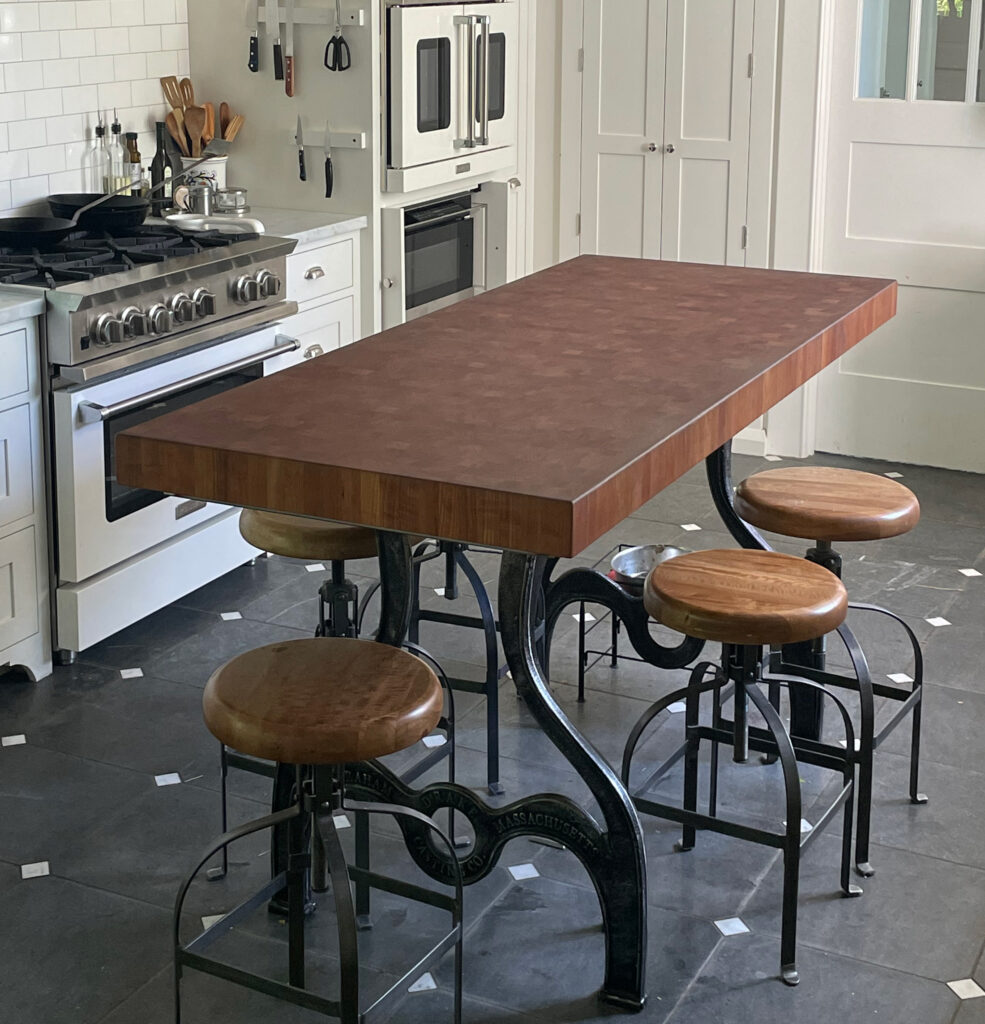
Material Characteristics
Material
Sustainability
All cherry lumber is sourced domestically from the United States, where growth continues to exceed annual harvest rates, and meets FSC sourcing regulations. FSC-certified material is available upon request for qualifying projects.
Color Range
Light pinkish-brown when freshly milled, gradually darkening to richer amber and warm brown tones with age and light exposure.
Grain Character
Typically fine and straight-grained with occasional curly figure, pitch pockets, and subtle natural variation.
Texture
Fine, smooth texture with a natural low-luster appearance.
Relative Hardness
American Black Cherry has a Janka hardness rating of approximately 950, making it moderately hard and well suited for countertops, tables, islands, and interior architectural surfaces.
Typical Applications
Design Compatibility
American Black Cherry works particularly well within:
Its warmth and natural aging characteristics allow it to bring depth and visual softness to interiors that might otherwise feel overly cool or monochromatic.
Thickness Availability
Thickness availability varies by construction style and application requirements.
Edge grain and end grain surfaces are commonly fabricated in thicknesses ranging from 1½" to 7½".
Our cherry face grain surfaces are typically fabricated between 1" and 2", depending on board width, span, and overall construction requirements.
Color & Aging
American Black Cherry undergoes one of the most noticeable natural aging processes among domestic hardwoods.
Freshly fabricated surfaces often appear considerably lighter than aged cherry furniture or cabinetry. With exposure to natural and artificial light, the wood gradually deepens into richer amber, russet, and reddish-brown tones over time.
This color evolution is a natural characteristic of the species and should be expected. Areas exposed unevenly to light may initially age at different rates before gradually blending more uniformly.
Finish selection also significantly impacts cherry’s appearance. Clear finishes allow the wood’s natural aging process to remain visible, while darker finishes can accelerate or intensify the appearance of warmth and color depth.
Sample approval is recommended whenever color matching or tonal consistency is important.
Performance & Durability
Cherry offers good dimensional stability and a smooth, durable surface suitable for everyday residential and light commercial use.
Compared to harder species such as maple or white oak, cherry is somewhat softer and may show dents or wear more readily in high-impact environments. Many clients value this gradual patina as part of the wood’s natural aging process.
Like all solid wood surfaces, cherry expands and contracts seasonally with changes in humidity. Proper installation and environmental control are important for long-term performance.
Finish Considerations
Compared to lighter hardwoods such as maple, American Black Cherry is generally less affected by finish coloration because of its naturally warm tone and rich aging characteristics.
Different finishes primarily influence:
Oil finishes such as mineral oil tend to penetrate deeply and can darken cherry considerably over time, while clear matte and satin finishes typically preserve more of the wood’s natural color variation and evolving character.
Because cherry naturally deepens in color with age and light exposure, sample approval is recommended whenever color matching or long-term tonal consistency is important.
Natural Variation
American Black Cherry naturally contains variation in tone, grain movement, pitch pockets, mineral streaking, and occasional figured areas. Freshly milled boards may also display more pronounced color variation before the wood begins to age and mellow with light exposure.
These characteristics are inherent to solid hardwood and contribute to the individuality, warmth, and authenticity of each finished surface.
Discuss an American Black Cherry Project
We help homeowners, designers, and builders specify cherry surfaces appropriate for the application, environment, and long-term use requirements.
Project Consultation
Share project details, dimensions, drawings, finish preferences, or reference imagery. We review each inquiry to determine scope, coordination requirements, and material suitability.
Wood Samples
Order hardwood samples to evaluate species, grain, color, texture, and finish options within your space and lighting conditions.


