
Craftsmanship & Fabrication
Built with intention
Craftsmanship & Fabrication
Built with intention
Balancing Craftsmanship and Precision
Working with solid wood requires both hands-on judgment and technical precision.
Some parts of the process depend on experience, material awareness, and decision-making that cannot be automated. Others demand machinery capable of holding tight tolerances and delivering consistent results.
Our shop is built around both.
Milling
Hands on the Material
The milling department is where the character of each piece begins to take shape.
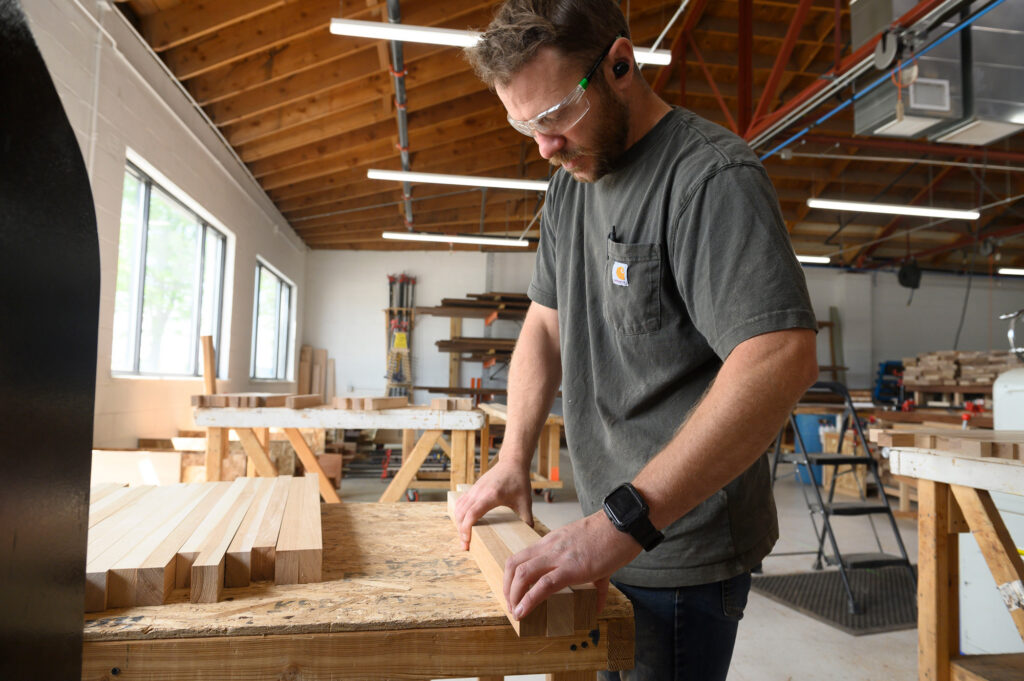
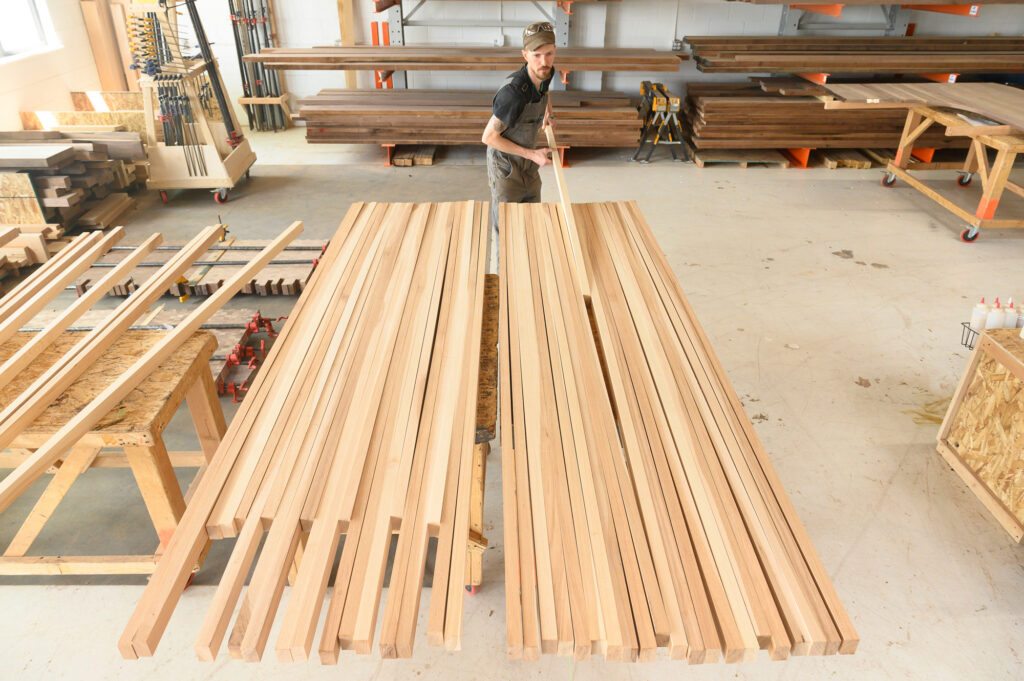
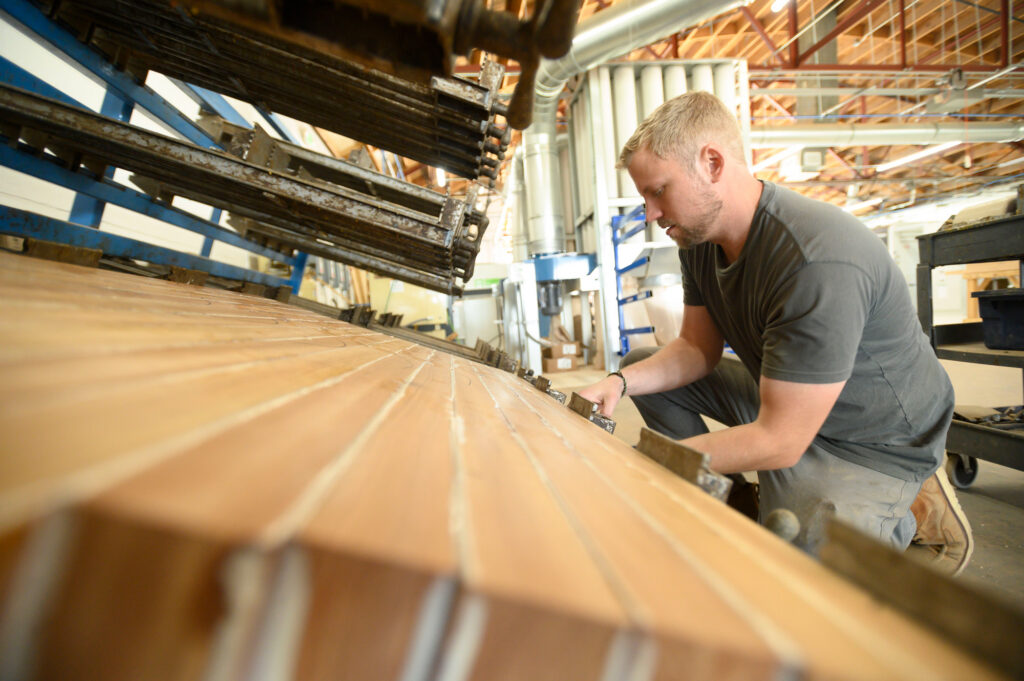
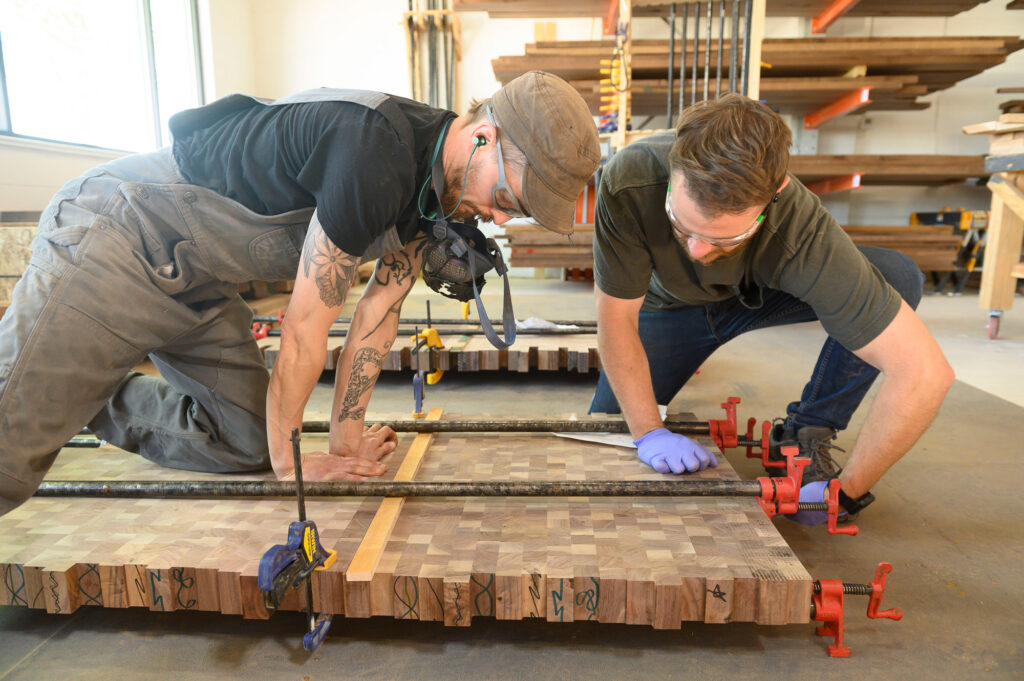
Much of this process still relies on the same principles used generations ago. Boards are hand-selected, evaluated for grain and color, and arranged into cohesive surfaces. Layout decisions, grain flow, and glue-ups all depend on human judgment and experience.
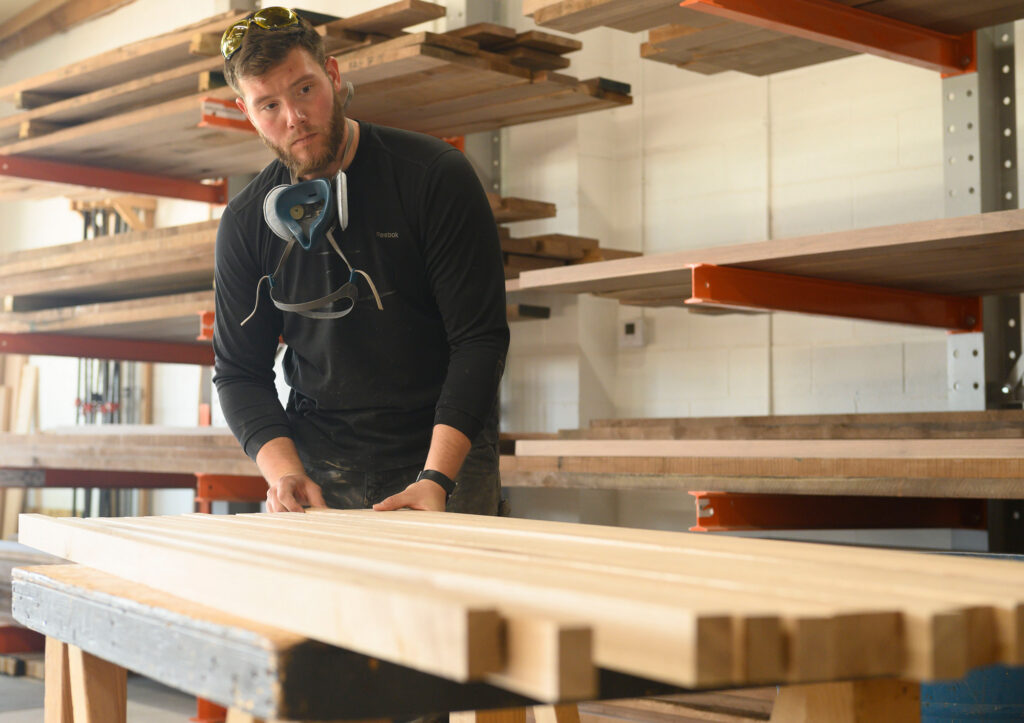
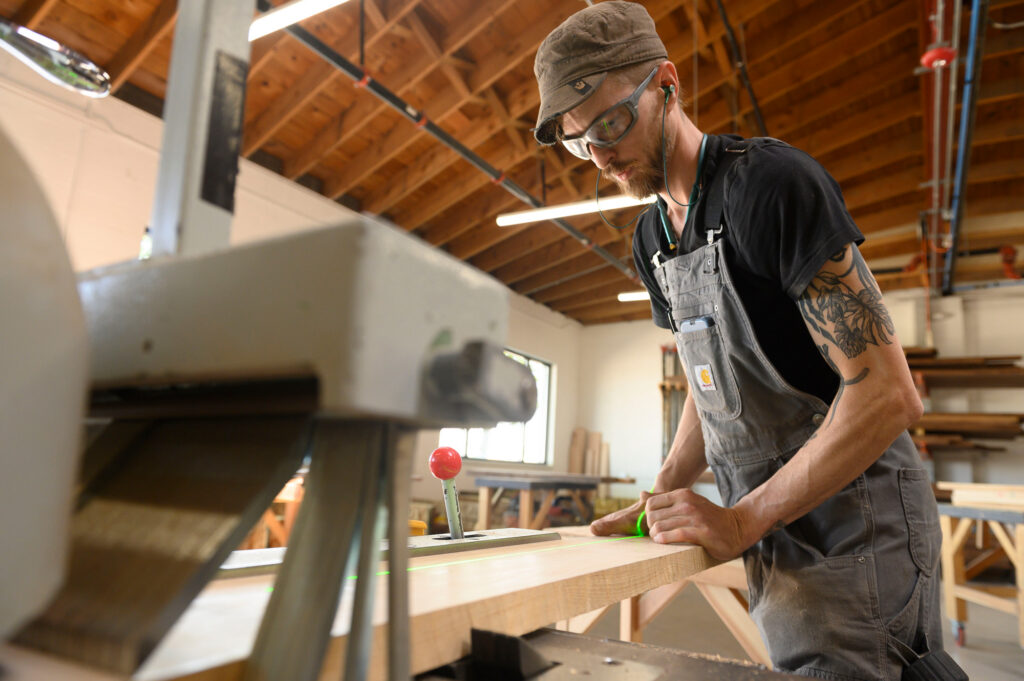
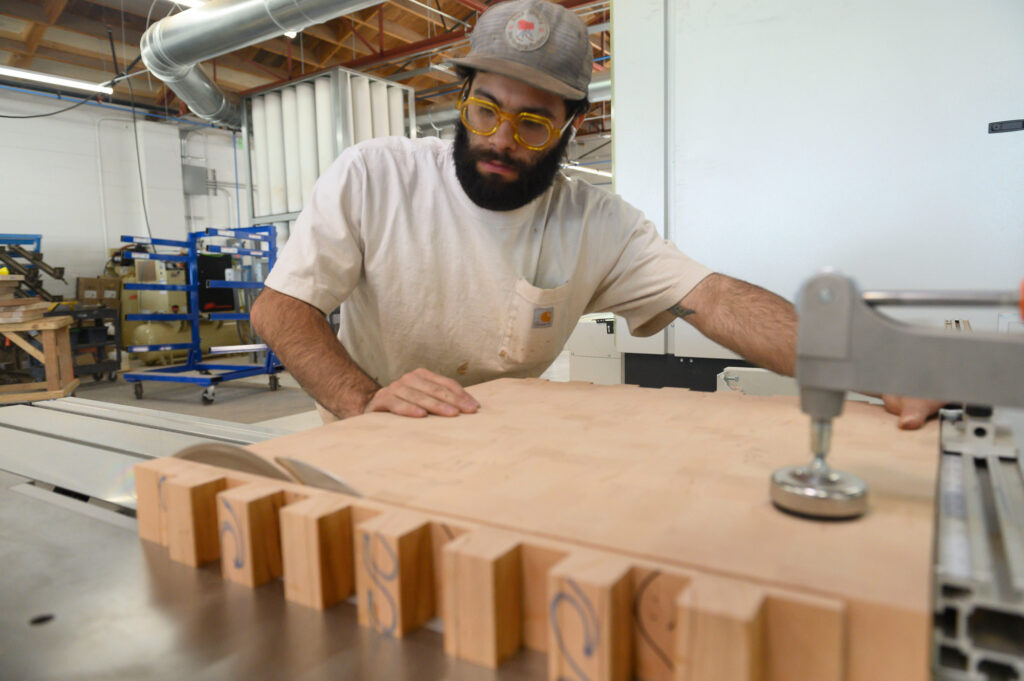
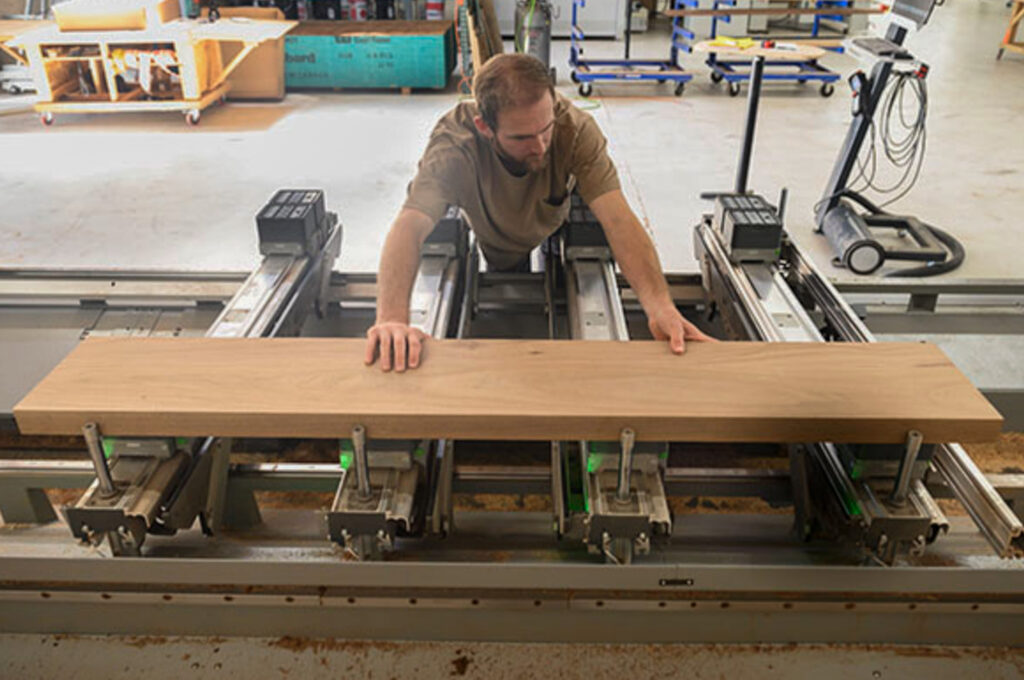
The machinery used in this stage is purpose-built to produce tight, visually seamless glue joints on large-format hardwood surfaces. Our extended-span straight-line rip saw maintains perfectly straight cuts across long lengths, while precision surfacing machines joint and plane edge- and end-grain staves to exceptionally straight, smooth mating surfaces prior to glue-up. Large clamp systems then apply controlled pressure evenly across the full lamination, helping create stable joints capable of performing reliably over time.
No two boards behave exactly alike. Working with solid wood requires understanding how individual pieces relate to one another both structurally and visually.
This stage of the process remains deeply hands-on because craftsmanship matters most where decisions cannot be automated.

Shaping & Finishing
Precision Where It Matters
Once the material has been selected and assembled, precision becomes critical.
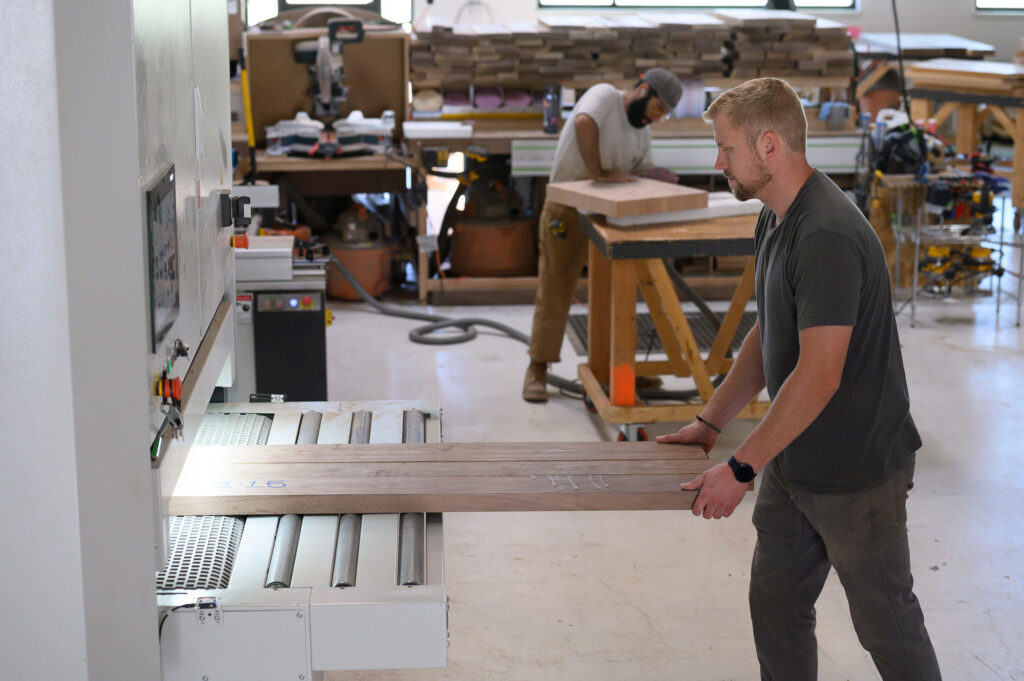
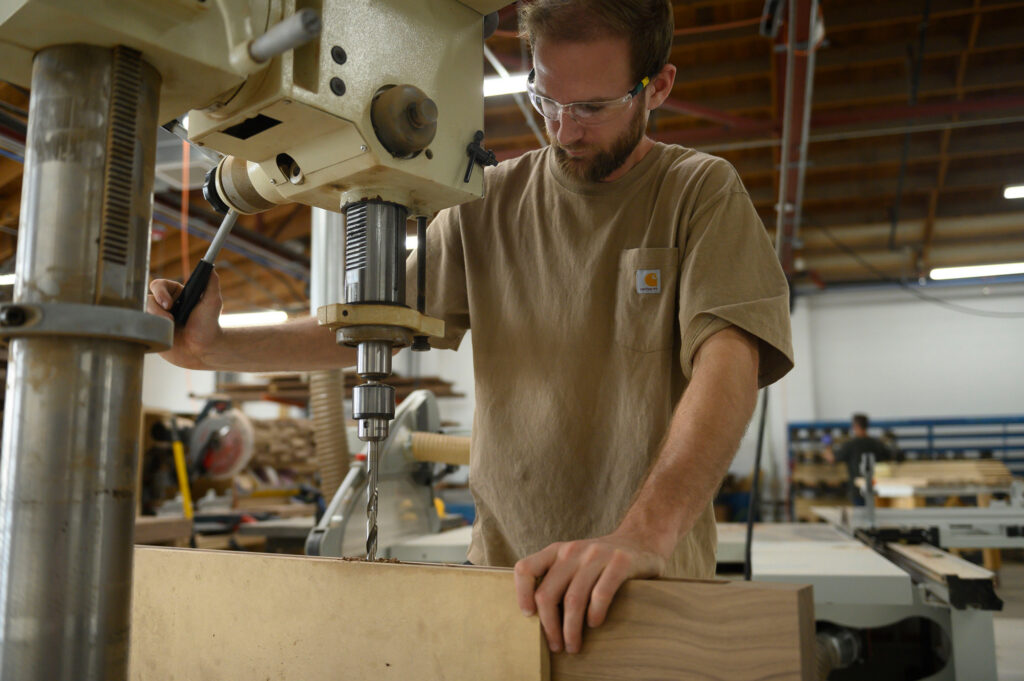
Our shaping and finishing department combines modern equipment with careful handwork to ensure consistency, accuracy, and long-term performance. Wide-belt sanding allows surfaces to be flattened accurately and uniformly. CNC machining ensures components are cut precisely to specification. Flat-line finishing systems provide an even, controlled application across large surfaces.
Technology allows us to maintain tight tolerances and repeatable quality while preserving the natural character of the wood itself.
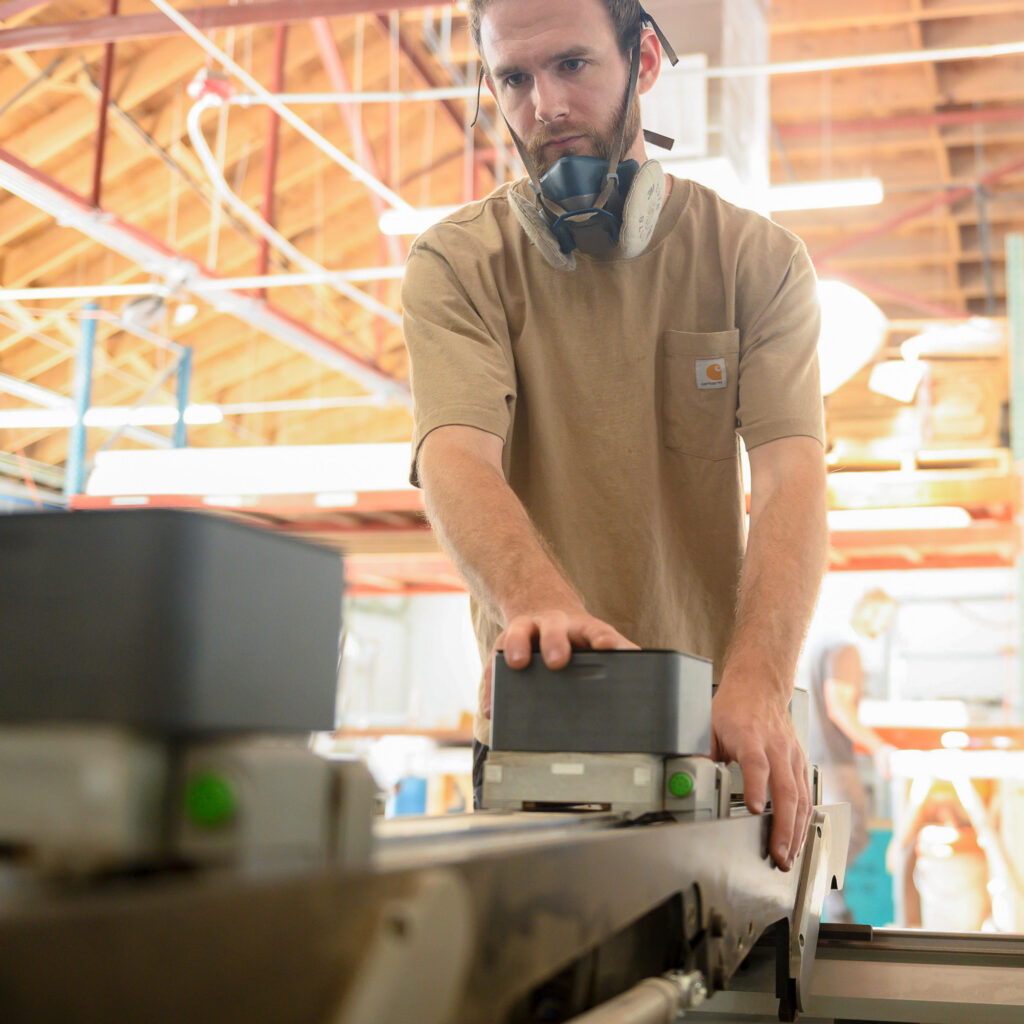
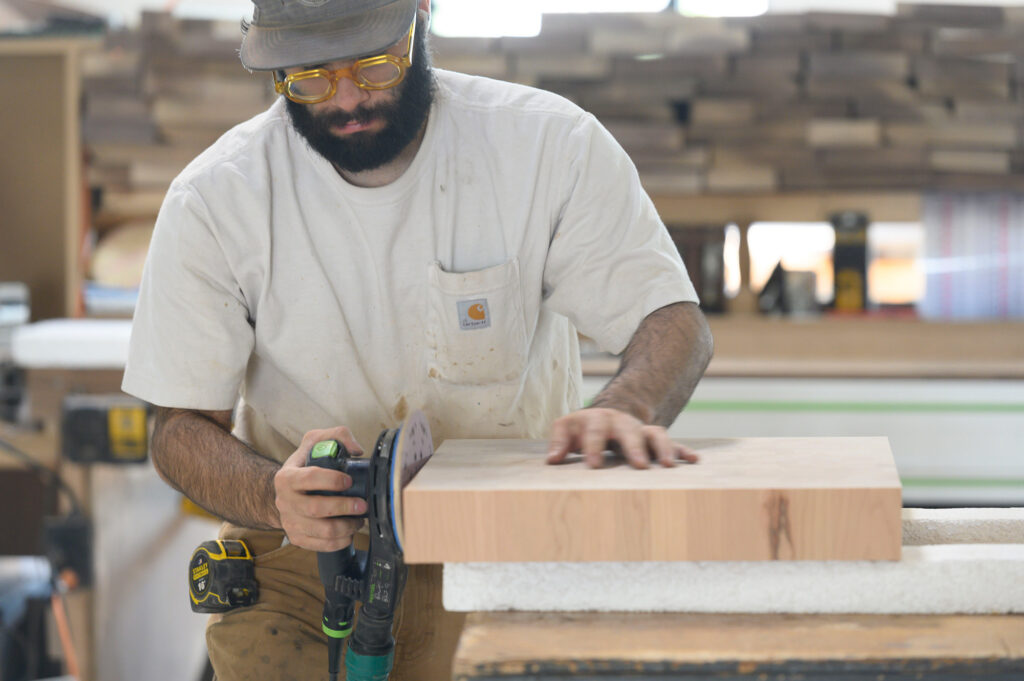
Even at this stage, the process remains hands-on. Final preparation, detail work, and hand-sanding continue to play an essential role in the finished result.
Quality Control
Checked at Every Stage
Quality control is built into the process from beginning to end.
Dimensions, layout, and board arrangement are reviewed before glue-up to ensure the composition and construction are correct from the start.
After wide-belt sanding, surfaces are inspected again for dimensional accuracy and aesthetic consistency. Sanding can reveal latent knots, mineral streaks, or natural imperfections that were not previously visible.
Following shaping and machining, pieces are checked again to confirm profiles, cut locations, and overall visual quality before final sanding begins. Particular attention is paid to areas where shaping may expose new grain variation or natural defects.
Before completion, every piece undergoes a final inspection for dimensions, finish quality, profile consistency, and color continuity across the full order.
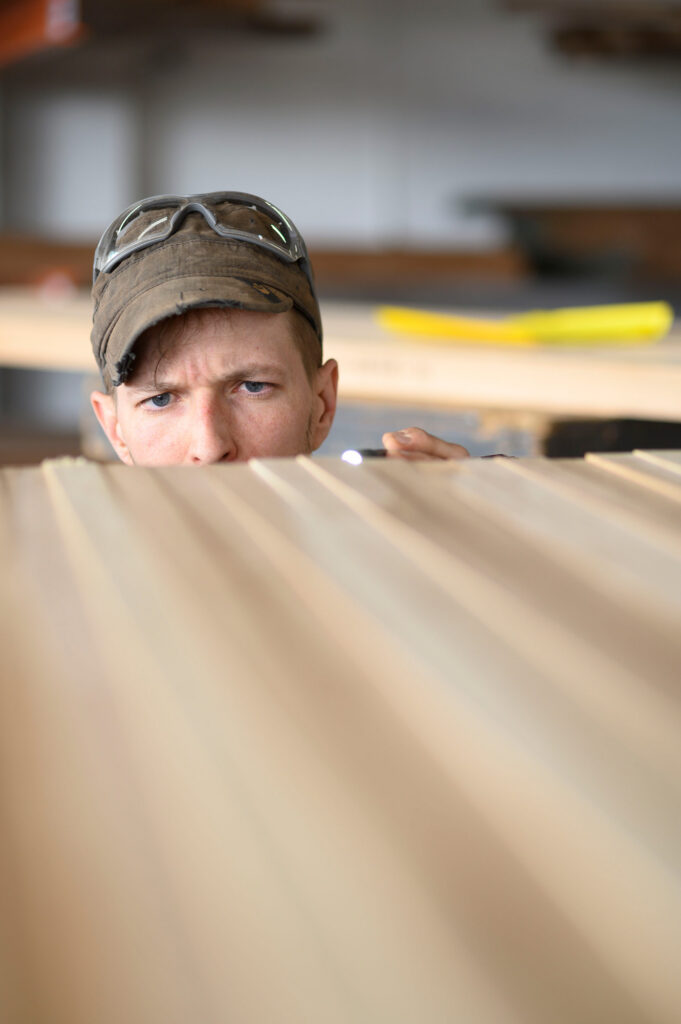
Our goal is not uniform perfection. It is consistency, precision, and a finished surface that feels intentional in every detail.


