
End Grain vs Edge Grain vs Wide Plank
We offer three primary surface constructions, end grain, edge grain, and wide plank, each defined by how the wood is oriented and how the surface is intended to be used. End grain shows the ends of the fibers, edge grain the narrow edge of each board, and wide plank the broad face. That one choice changes how the surface looks, takes a knife, moves, and should be finished.
Which is right for you? End grain for heavy chopping and visual interest, edge grain for everyday kitchen countertops, traditional or contemporary, and wide plank for wood character and formal dining surfaces.

End Grain
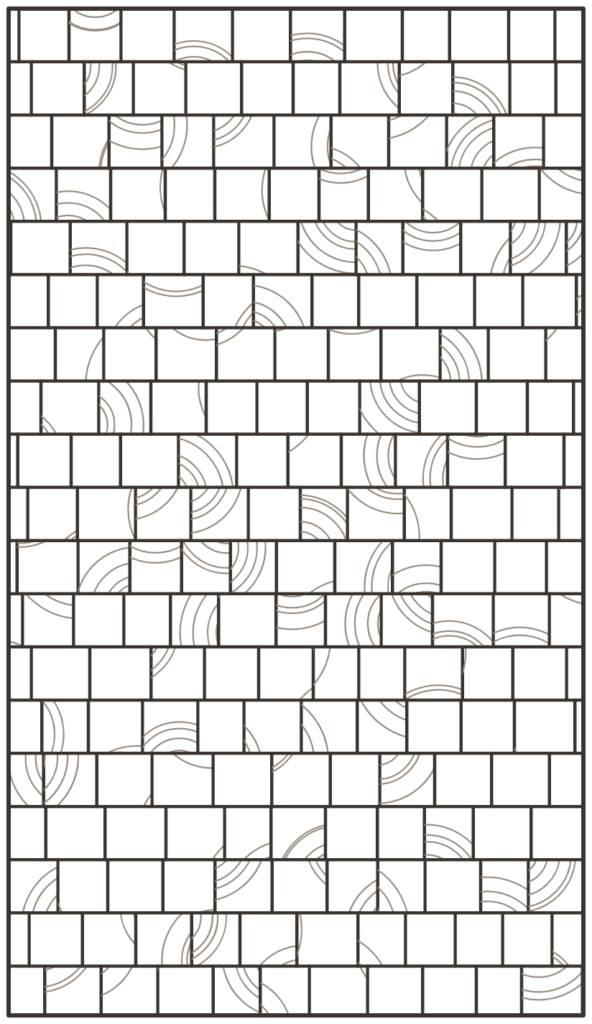
Short blocks set on end, offset row to row.
What you see: The ends of the wood fibers
Look: Varied, offset block pattern with visible depth
Cutting: Best. Fibers part for the blade and squeeze closed again, minimizing wear on both the wood and the knife blade
Movement: Most. With more open fibers exposed, very responsive to changes in humidity. Moves in both length and width, and requires airflow on top and bottom
Thickness: 2″ to 7¾” or more, depending on size
Best for: Gourmet kitchens, heavy chopping, visual interest

Edge Grain
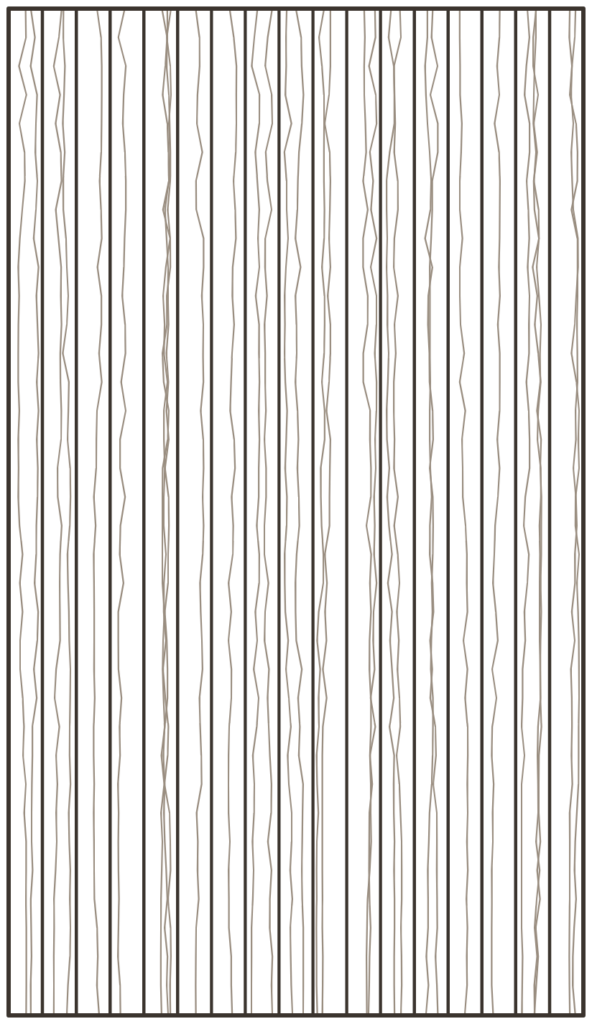
Narrow staves running the full length.
What you see: The narrow edge of each board
Look: Linear and functional; traditional in a kitchen, equally at home in contemporary spaces
Cutting: Good for everyday food prep, marks show more than end grain
Movement: Least. More stable than end grain, and less susceptible to curling or cupping than wide plank.
Thickness: 1½″ to 6″
Best for: Everyday countertops; contemporary or traditional kitchens

Wide Plank
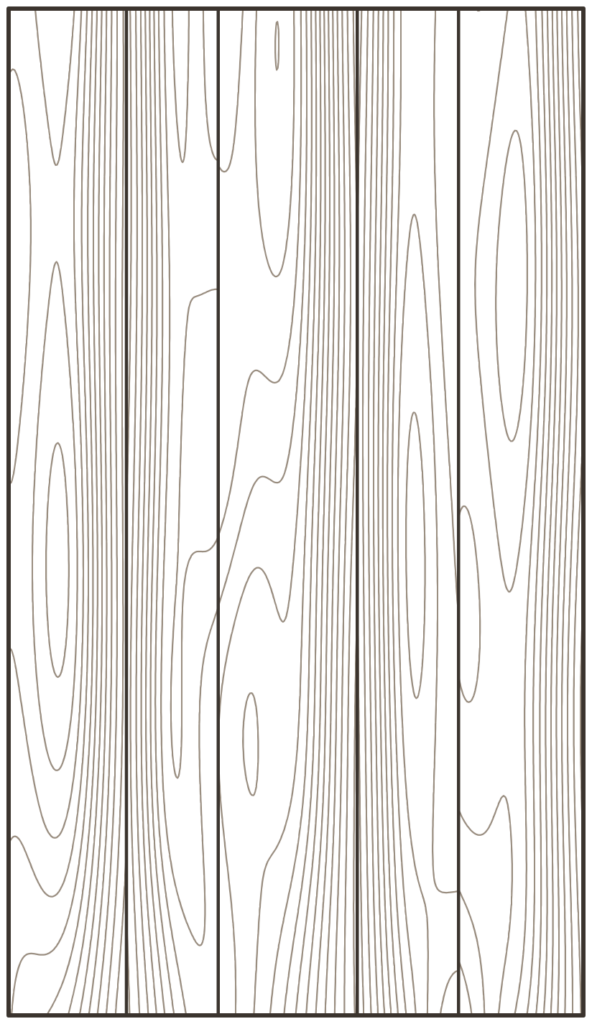
Wide boards running the full length.
What you see: The wide face of each board
Look: Long, wide, continuous boards showing full grain and figure; a more formal style
Cutting: Not recommended for direct cutting; marks show most
Movement: Moves mainly across the width, with each individual board shifting toward the natural geometry of the tree from which it came; requires the most structural restraint to prevent curling and cupping
Thickness: 1″ to 2½”, depending on species
Best for: Wood character; formal dining surfaces; traditional furniture look
At a sink or range: any of the three can go next to a sink or cooktop. What decides it is the finish. Our Impermio sealed finish is the safest choice in both places. Near a sink, a hardwax oil such as Rubio Monocoat handles water if it is wiped up promptly, though exposed end grain needs extra care. Near a range, cooking oil and grease can soak through oil and hardwax finishes and stain, so we recommend Impermio there. That said, the finish is always your choice. If you want to chop directly on the surface, an oil finish is the better fit, since knives cut through a sealed film. We recommend based on how the surface will be used, walk you through the tradeoffs, and build it with whichever finish you choose.
End Grain Butcher Block
End grain is built so the wood fibers stand upright at the surface. Under a knife, the fibers separate slightly and then close again. That’s why end grain shows the least wear from cutting and is gentlest on a blade, and why it’s the choice for chef-driven kitchens.
It is also the most demanding to build and install. With the fiber ends exposed on both faces, end grain takes up and releases moisture more readily than the other styles. It moves in length and width, needs airflow beneath it, and needs continuous support, with embedded steel bracing built into the project. Thickness runs from 2 to 7¾ inches, or more, depending on the size of the piece.
We build end grain from several edge grain panels, crosscut into strips and turned on their ends. The strips are then set in an offset layout: staggering the joints makes the top more stable, and the pattern reads as varied rather than manufactured. The changing grain direction can’t be finished by machine alone, so every end grain surface is hand sanded.
Best for: heavy chopping, prep islands, and surfaces where you want visual interest.
Edge Grain Butcher Block
Edge grain is built from staves with the grain running lengthwise, creating a linear, continuous surface. It is more dimensionally stable than end grain and sits easily in almost any interior. It is the traditional kitchen countertop because it is functional and it is what kitchens have long used, but in white oak or walnut it reads just as well in a contemporary space.
It works as a cutting surface for everyday food prep, with less maintenance than end grain, though knife marks show more readily. Because it is laminated from individual staves, thickness can be built to the project, from 1½ to 6 inches, for substantial islands and heavy work surfaces without applied build-ups.
Every stave runs the full length of the piece. We don’t use short finger-jointed sections, which interrupt the pattern and create joints where moisture can get in and separation can start.
Best for: everyday kitchen countertops, islands, and bar tops, in traditional or contemporary kitchens.
Wide Plank
Wide plank shows the face of each board: the full grain pattern, figure, and color across long, continuous lines. It’s chosen for appearance. Marks and impressions show more than on edge or end grain, so it suits surfaces where food is prepared on a board rather than directly on the wood.
Most wide plank is flat sawn, which shows the cathedral figure most people picture, and we lay those boards out so the tighter-grain edges meet at some joints and the figure carries across others. Quarter sawn and rift sawn boards are also available for a straighter, quieter grain. Tops run from 1 to 2½ inches thick, depending on species. Board widths are varied on purpose, typically 3 to 6 inches on 1-inch tops and 4 to 8 inches on 1½-inch tops, so the surface reads as one composition rather than a row of glue lines.
Wide plank moves mainly across the width of each board, which the installation has to allow for.
Best for: formal dining tables, statement islands, and surfaces where the wood’s character leads.
What we don’t build
Why We Don't Make Blended Grain
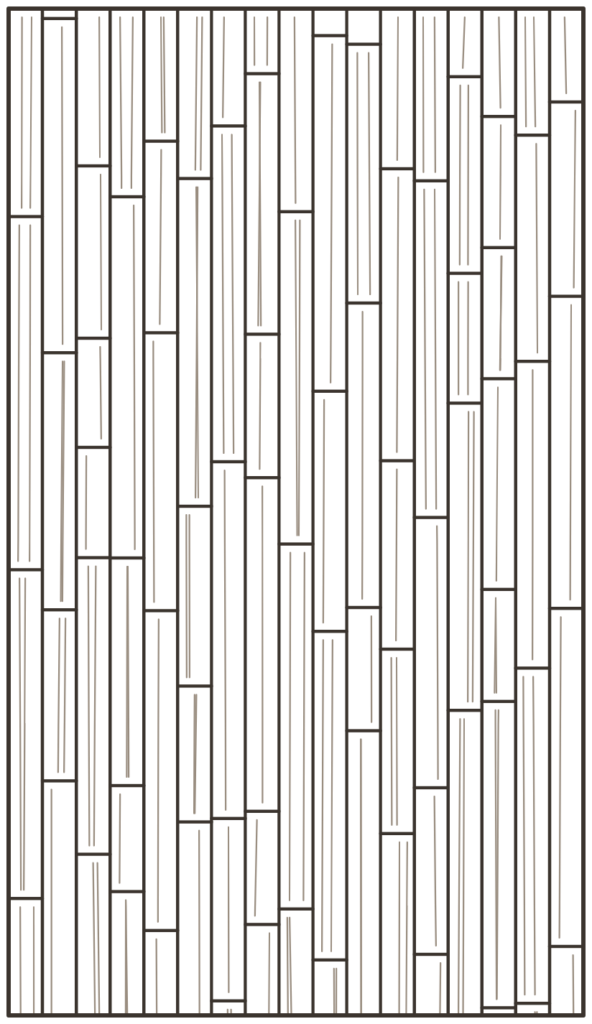
Blended grain butcher block is built from short pieces of random length, glued end to end and staggered across the top. It is common because it is inexpensive to make: the pieces are typically offcuts left over from other work, so material that would otherwise be scrap becomes a countertop.
We don’t build it, for three reasons.
It looks choppy. Short pieces and scattered end joints break the surface into a patchwork, with no continuous grain for the eye to follow. It reads as assembled, not designed.
It is less stable. Every end-to-end joint is a weak point, more prone to movement and separation over time than a continuous board.
It is harder to cut into. Sink and cooktop cutouts can’t be placed around the joints, so a cut can land on or right next to one, leaving a weak edge where the surface needs to be strongest.
Every edge grain and wide plank surface we build uses full-length staves or boards that run the whole length of the piece.
Which Style Should I Choose?
- Heavy chopping, or a surface with real visual interest: end grain
- An everyday countertop, traditional or contemporary: edge grain
- The wood’s character first, or a formal dining surface: wide plank
Any of the three can go next to a sink or range. The finish decides that, not the style (see Common Questions below).
Not sure? Order samples in the styles you’re considering and see them in your own light, or send us your plans and we’ll recommend a construction.
Common Questions
What is the difference between end grain and edge grain?
End grain shows the ends of the wood fibers, set vertically; edge grain shows the long edge of each board, running lengthwise. End grain is better for heavy cutting and easier on knives. Edge grain is more stable, needs less maintenance, and suits full kitchen countertops.
Can you cut on wide plank?
It isn’t designed for it. The face of the board shows knife marks and impressions more than the other styles, so use a separate cutting board.
Can a wood countertop go around a sink?
Yes, in any of the three styles, but a primary sink is the hardest place for wood. Water collects at the faucet, where dishes dry, and along the sink cutout. The finish matters more than the grain, and our Impermio sealed finish is the strongest protection. With an oil or hardwax finish, wipe water up promptly and avoid prolonged exposure. End grain needs the most care at the faucet, where it absorbs water fastest. Every style reacts badly to a wet towel or drying mat left on the surface. With a positive reveal, where the wood stops short of the sink edge and the cut edge is exposed, edge grain and end grain need extra care, because exposed end grain wicks moisture in and out.
Can a wood countertop go next to a range or cooktop?
Yes, but this is where the finish matters most. Cooking oil and grease spatter can soak through oil and hardwax finishes, including Rubio Monocoat, and leave dark stains. Our Impermio sealed finish keeps them on the surface where they wipe off, so it is the finish we recommend around a range. You can still choose another finish, such as Rubio Monocoat or an oil, once you understand the tradeoff: wipe spatter up promptly, and expect the area near the range to darken somewhat over time. If you want to chop directly on the counter, an oil finish is the right choice anyway. Impermio is a sealed film, so knives cut through it, and it can’t be spot-repaired, while an oiled surface can be refreshed as it wears.
Why does end grain need airflow underneath?
End grain exchanges moisture through both its top and bottom faces. If the underside is sealed off, only the top responds to humidity changes, which can make the surface curl.
Not Sure Where to Start?
We Love to Talk Wood.
Species, grain, finish, sinks: it’s a big decision, and we’d love to help you feel confident about it. Tell us about your space and why you’re drawn to wood. Send photos or drawings if you have them, or just a rough idea. We’ll walk you through the options and come back with pricing.
Choosing a species or finish? Order samples →
Designer, architect or builder? Our trade program →